

Introduction
Artificial intelligence is often viewed as a software revolution, but its growth depends just as much on the infrastructure required to support it.1 Behind every AI prompt and data query lies an extensive network of data centres, transmission lines, cooling systems, and power plants. As AI adoption accelerates, attention is shifting from concerns around technological capability to whether our ecosystem and infrastructure can keep pace. Reflecting on the scale of this challenge, McKinsey research estimates that providing 50 gigawatts (GW) of additional data centre capacity is required to support AI in the United States and would require ~$500 billion in infrastructure investment alone.2
This article explores the infrastructure underpinning AI’s growth and the sustainability considerations that come with it. It also examines what RPIA Capital Management considers when identifying investment opportunities across the AI value chain.
Powering AI
The International Energy Agency (IEA) estimates that global electricity consumption from data centres could increase from approximately 360 terawatt-hours (TWh) today to more than 1,000 TWh in 2030 and 1,300 TWh in 2035.3 As AI adoption accelerates, meeting this growing electricity demand will require significant investment in power generation, particularly renewables, natural gas, and nuclear energy.
A large share of new renewable generation is expected to be financed through long-term power purchase agreements (PPAs) between technology companies and energy developers. For example, in 2025 Google signed a framework agreement with Brookfield Asset Management 4 to procure up to 3,000 megawatts (“MW”) of hydroelectric power in the United States, while separately entering into a 15-year agreement with TotalEnergies5 to supply renewable electricity to its data centre operations. These agreements highlight how hyperscalers are increasingly securing dedicated energy supplies to support expanding AI workloads.
Nuclear energy may also play an increasingly important role in meeting AI’s growing demand for reliable, around-the-clock electricity. Supportive government policies, including Canada’s plan to build up to 10 nuclear reactors by 2040, together with growing investments in small modular reactors (SMRs), underscore the role of nuclear energy as a dependable, low-carbon source of power6. As discussed in our October 2025 article, Nuclear is the New Green, RPIA Capital Management both recognizes the important role nuclear energy plays in supporting a low-carbon electricity system and views select nuclear issuers as attractive investment opportunities.
Cooling Systems and Water Consumption
Water is becoming an increasingly important consideration as AI infrastructure expands. Many data centres rely on water for cooling, and the IEA estimates that global data Centre water consumption is ~560 billion liters per year and could rise to 1.2 trillion liters by 2030.7
Water demand is further complicated by the location of many existing and planned data centres. In 2024, a team of research analysts at Morgan Stanley assessed more than 14,000 data centres and found that roughly one-quarter of existing facilities and nearly one-third of those currently under construction may face water scarcity by 2050.8 These constraints have already contributed to community opposition and project delays in some regions, highlighting how local water availability has become an increasingly important consideration when assessing investment opportunities.9Cooling technology also plays a significant role in a data centre’s environmental footprint. As shown below, different cooling systems involve trade-offs between water and energy consumption. Mechanical cooling uses more electricity, high-efficiency systems reduce energy demand, adiabatic cooling trades water for lower electricity use, and free-air cooling minimizes both.10
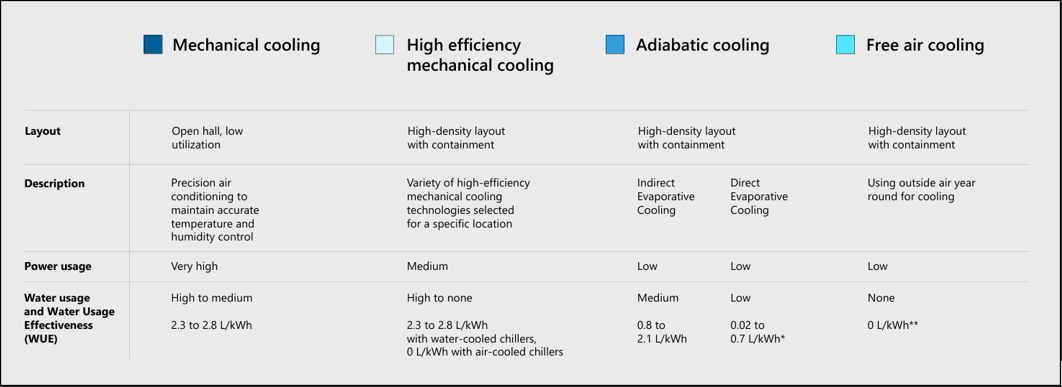
Source: Microsoft. (2023, May). Azure modern datacenter cooling [Infographic]. Microsoft Datacenters. https://datacenters.microsoft.com/wp-content/uploads/2023/05/Azure_Modern-Datacenter-Cooling_Infographic.pdf
Energy efficiency is also commonly measured using Power Usage Effectiveness (PUE), which compares a data centre’s total energy consumption to the energy used by its equipment. Lower PUE values indicate greater energy efficiency.
Temperature, humidity, and water availability influence cooling requirements, making site location an increasingly important consideration. The figure below illustrates how different cooling technologies are suited to different climates. Hot, humid climates typically require mechanical cooling; dry climates are well suited to adiabatic cooling; and cooler climates can rely more heavily on free-air cooling. Innovations such as data centres in space are being explored as a potentially more sustainable approach to cooling, though the concept still requires development.11
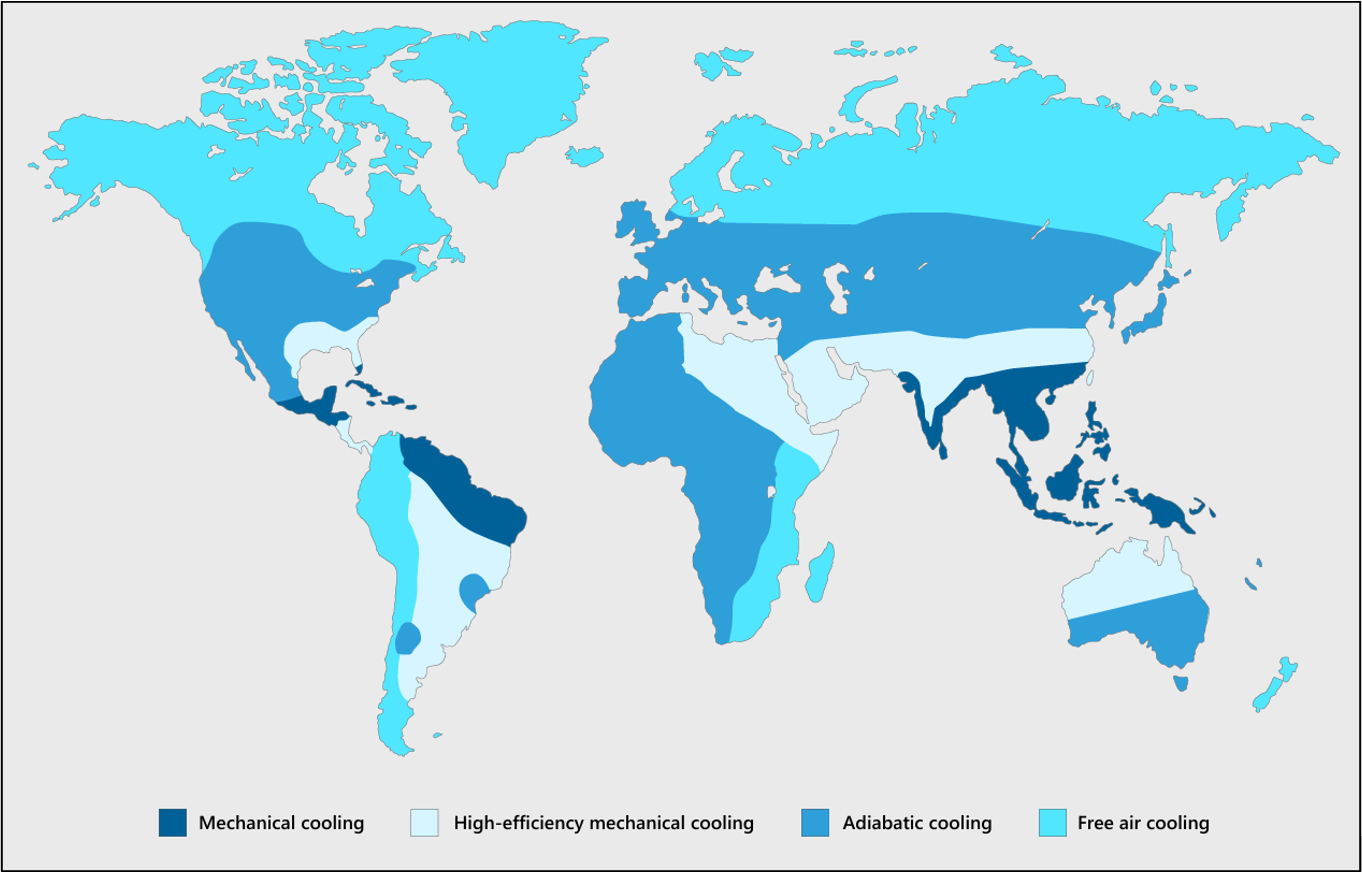
Source: Microsoft. (2023, May). Azure modern datacenter cooling [Infographic]. Microsoft Datacenters. https://datacenters.microsoft.com/wp-content/uploads/2023/05/Azure_Modern-Datacenter-Cooling_Infographic.pdf
Community acceptance is becoming an increasingly important constraint on data centre development. In Ontario, concerns over electricity and water use, noise, and pressure on local infrastructure have prompted some municipalities to impose temporary restrictions on new projects.12 In response, the province has proposed a framework prioritizing developments that meet environmental standards, including projects using closed-loop cooling systems to minimize water consumption.
Investment Implications
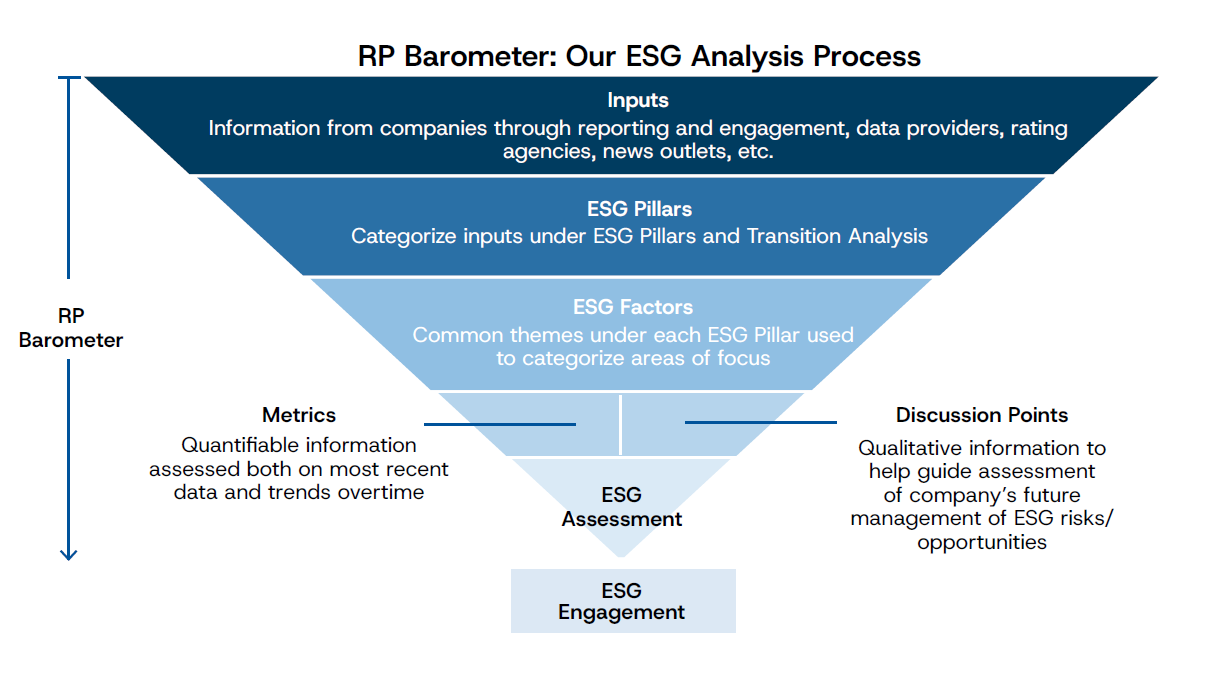
At RPIA Capital Management, energy sourcing, water availability, cooling technologies, and broader environmental considerations are increasingly important when assessing AI infrastructure investments. Through our proprietary RP Barometer, we combine quantitative ESG data with company engagement, third-party research, and internal analysis to identify material risks and opportunities. For project-level opportunities, we conduct additional due diligence on factors such as cooling technologies, energy and water consumption, local water scarcity, physical climate risks, and community relations. As AI infrastructure continues to expand, the RP Barometer provides a structured framework for evaluating the long-term sustainability and resilience of potential investment opportunities.
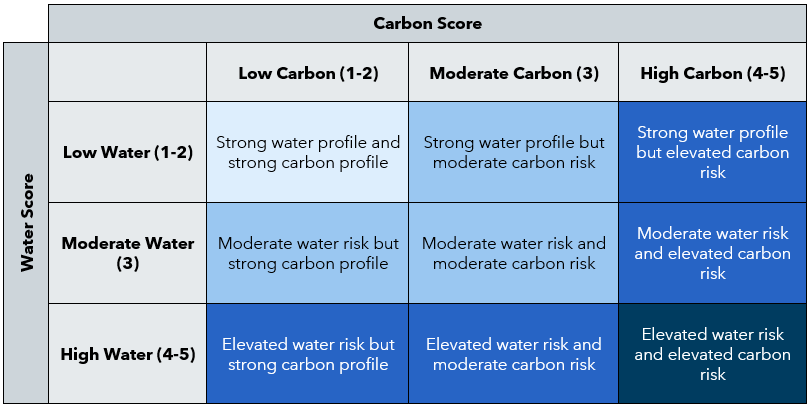
To complement our investment analysis, we developed an internal framework to assess the ESG characteristics of 14 data centres across the United States. To evaluate these facilities consistently, each facility was given a water and carbon score on a scale of one to five, with lower scores indicating a stronger ESG profile. Water scores are based on factors such as cooling technology, estimated water consumption, and local water availability while carbon scores reflect carbon intensity and energy sources. As shown in the chart below, we can better understand the ESG profile of specific data centres through this scoring system.
We also monitor changes to local regulations and potential moratoriums that could restrict future data centre development or access to power. These developments can provide important signals about emerging environmental, infrastructure, and community considerations that may affect investment risk.
One deal we recently participated in was a USD$4.6-billion green bond issued to support the development of two data centres in Fayetteville, Georgia.13 This investment provided us with exposure to the continued growth in data centre infrastructure while demonstrating how ESG considerations are incorporated into our fundamental investment analysis.
The Fayetteville data center uses a closed-loop cooling system designed to minimize operational water consumption, supporting a strong water score in our assessment. While the project has faced local scrutiny over construction-related water use and broader community impacts,14 its cooling design helps mitigate some of these concerns. We also consider the evolving regulatory backdrop. In March 2026, Fayetteville prohibited new data centre developments, though the restriction does not apply to the existing projects from the issuer.15 The moratorium nevertheless highlights how environmental and community pressures can translate into regulatory constraints, making these factors increasingly important to monitor as the sector expands.
These considerations feed directly into our fundamental credit research and investment process. Differences in energy sourcing, water availability, cooling technologies, and local regulatory environments can influence an issuer’s long-term operating resilience, capital requirements, and overall credit profile. Incorporating these factors helps us assess not only where ESG-related risks exist, but how effectively they are being mitigated, and which issuers are best positioned to benefit from continued growth in AI infrastructure.
As AI adoption grows, investment opportunities are expanding beyond software to the infrastructure that enables it. At RPIA Capital Management, this evolution is an important consideration in our investment process. Assessing not only the growth potential of this infrastructure, but also how its environmental and community impacts are managed, helps us evaluate which issuers are best positioned to participate in that growth over the long term. Ultimately, the next phase of AI may be defined not by what technology can do, but by the infrastructure that determines how far it can go.
Sources:
1. AI market trends 2026: Global Investment, risks, and buildout. Morgan Stanley. (2026, March 9). https://www.morganstanley.com/insights/articles/ai-market-trends-institute-2026
2. Green, A., Tai, H., Noffsinger, J., Sachdeva, P., Bhan, A., & Sharma, R. (2024, September 17). How Data Centers and the energy sector can sate AI’s hunger for power. McKinsey & Company. https://www.mckinsey.com/industries/private-capital/our-insights/how-data-centers-and-the-energy-sector-can-sate-ais-hunger-for-power
3. Spencer, T., & Singh, S. (2025, April). Energy supply for AI. International Energy Agency (IEA). https://www.iea.org/reports/energy-and-ai/energy-supply-for-ai
4. Brookfield Asset Management, Brookfield Renewable, & Google. (2025, July 15). Brookfield and Google sign hydro framework agreement to deliver up to 3,000 MW of homegrown energy in the United States. https://bep.brookfield.com/press-releases/bep/brookfield-and-google-sign-hydro-framework-agreement-deliver-3000-mw-homegrown
5. TotalEnergies. (2025, November 12). United States: TotalEnergies to supply renewable power to Google’s data centers for 15 years. https://totalenergies.com/newsroom/united-states-totalenergies-supply-renewable-power-googles-data-centers-15/?lang=eng
6. Murray, N. (2024, June 20). Federal government unveils new nuclear energy strategy. CBC News. https://www.cbc.ca/news/politics/federal-nuclear-strategy-9.7244509
7. Spencer, T., & Singh, S. (2025, April). Energy supply for AI. International Energy Agency (IEA). https://www.iea.org/reports/energy-and-ai/energy-supply-for-ai
8. Powering generative AI. Morgan Stanley. (2024, March 8). https://www.morganstanley.com/ideas/ai-energy-demand-infrastructure
9. Young Chung, Y., Daradjian, F., & Leahy, T. (2025, December 9). When AI meets water scarcity: Data centers in a thirsty world: MSCI. MSCI Inc. https://www.msci.com/research-and-insights/blog-post/when-ai-meets-water-scarcity-data-centers-in-a-thirsty-world
10. Microsoft. (2023, May). Azure modern datacenter cooling [Infographic]. Microsoft Datacenter. https://datacenters.microsoft.com/wp-content/uploads/2023/05/Azure_Modern-Datacenter-Cooling_Infographic.pdf
11. Al Kez D, Foley AM, Hasan Wong FWB, Dolfi A, Srinivasan G. AI-driven cooling technologies for high-performance data centres: state-of-the-art review and future directions. Sustainable Energy Technologies and Assessments. 2025;82:104511. doi:10.1016/j.seta.2025.104511
12. Tram J. Ontario data centre plan needs more transparency, say Hamilton, Burlington councillors. CBC News. August 17, 2026. Accessed August 20, 2026. https://www.cbc.ca/news/canada/hamilton/ontario-data-centre-playbook-hamilton-burlington-9.7307748
13. Blackstone-owned QTS Data Centers looks to raise $4.6bn, starting with 10-year investment-grade green bond sale. Data Center Dynamics. https://www.datacenterdynamics.com/en/news/blackstone-owned-qts-data-centers-looks-to-raise-46bn-starting-with-10-year-investment-grade-green-bond-sale/
15. City of Fayetteville. (n.d.). Data Center Discussion. https://www.fayetteville-ga.gov/746/Data-Center-Discussion
16. Wong, A. (2025, November 4). Energy infrastructure: Ai’s power play. Energy Infrastructure: AI’s power play | J.P. Morgan Asset Management. https://am.jpmorgan.com/tw/en/asset-management/institutional/insights/market-insights/market-updates/on-the-minds-of-investors/energy-infrastructure-ais-power-play/
Important Information
The information herein is presented by RP Investment Advisors LP (“RPIA”) and is for informational purposes only. It does not provide financial, legal, accounting, tax, investment, or other advice and should not be acted or relied upon in that regard without seeking the appropriate professional advice. The information is drawn from sources believed to be reliable, but the accuracy or completeness of the information is not guaranteed, nor in providing it does RPIA assume any responsibility or liability whatsoever. The information provided may be subject to change and RPIA does not undertake any obligation to communicate revisions or updates to the information presented. Unless otherwise stated, the source for all information is RPIA. “Forward-Looking” statements are based on assumptions made by RPIA regarding its opinion and investment strategies in certain market conditions and are subject to a number of mitigating factors. Economic and market conditions may change, which may materially impact actual future events and as a result RPIA’s views, the success of RPIA’s intended strategies as well as its actual course of conduct. The information presented does not form the basis of any offer or solicitation for the purchase or sale of securities. Products and services of RPIA are only available in jurisdictions where they may be lawfully offered and to investors who qualify under applicable regulation. RPIA managed strategies and funds carry the risk of financial loss. Performance is not guaranteed and past performance may not be repeated. RPIA is a signatory of the UN Principles for Responsible Investment and as part of our commitment, we consider Environmental, Social & Governance (“ESG”) factors as part of our firm-level activities, including our investment process. ESG factors are important considerations in our investment management process but is supplemental to our primary financial and credit research and analysis functions. ESG factors that may be considered as part of our investment process include matters relating to climate change, energy use, energy efficiency, emissions, waste, pollution, matters related to human rights, impact on local communities, labour practices, employee working conditions, health and safety of the employees and affiliates, employee relations and diversity, executive compensation, bribery and corruption, board independence, board composition and diversity, alignment of interest between the shareholders and the executives, shareholder rights, and companies’ policies relating to ESG.
ESG integration, including components relating to issuer engagement, is a firm-wide investment approach but the weight and importance of it in our investment management process can vary across the investment funds we manage. Always refer to the relevant fund offering documents for important information on the investment objectives, strategies and associated risks of a particular fund. The consideration and implementation of ESG factors are also subject to RPIA’s internal investment and risk management policies and may be revised as a result of investment suitability requirements, current portfolio positioning and external market and economic factors.
The consideration of ESG factors in the investment process for RPIA managed mutual funds, including RP Strategic Income Plus Fund, RP Target 2028 Discount Bond Fund, RP Alternative Credit Opportunities Fund, and RP Alternative Global Bond Fund is limited and weighted less than the primary financial and credit analysis employed in the management of these funds. Please see the fund’s simplified prospectus for important information about the investment objectives, strategies and risks of each fund. Commissions, trailing commissions, management fees and expenses all may be associated with mutual fund investments. Please read the prospectus before investing. Mutual funds are not guaranteed, their values change frequently and past performance may not be repeated. Always consult with your registered investment dealer before investing in mutual funds.