

1. Markets Reprice Central Bank Paths After Geopolitical Shock
Geopolitical shocks in March drove a sharp increase in oil prices and broader risk asset volatility. The immediate impact was elevated inflation expectations, forcing markets to reassess the path of monetary policy. At the start of the year, expectations were for Canadian rates to hike once throughout 2026 and for the Fed to deliver 2-3 cuts. By quarter-end, pricing had shifted materially, with markets now expecting 1.7 hikes in Canada and almost no cuts from the Fed.
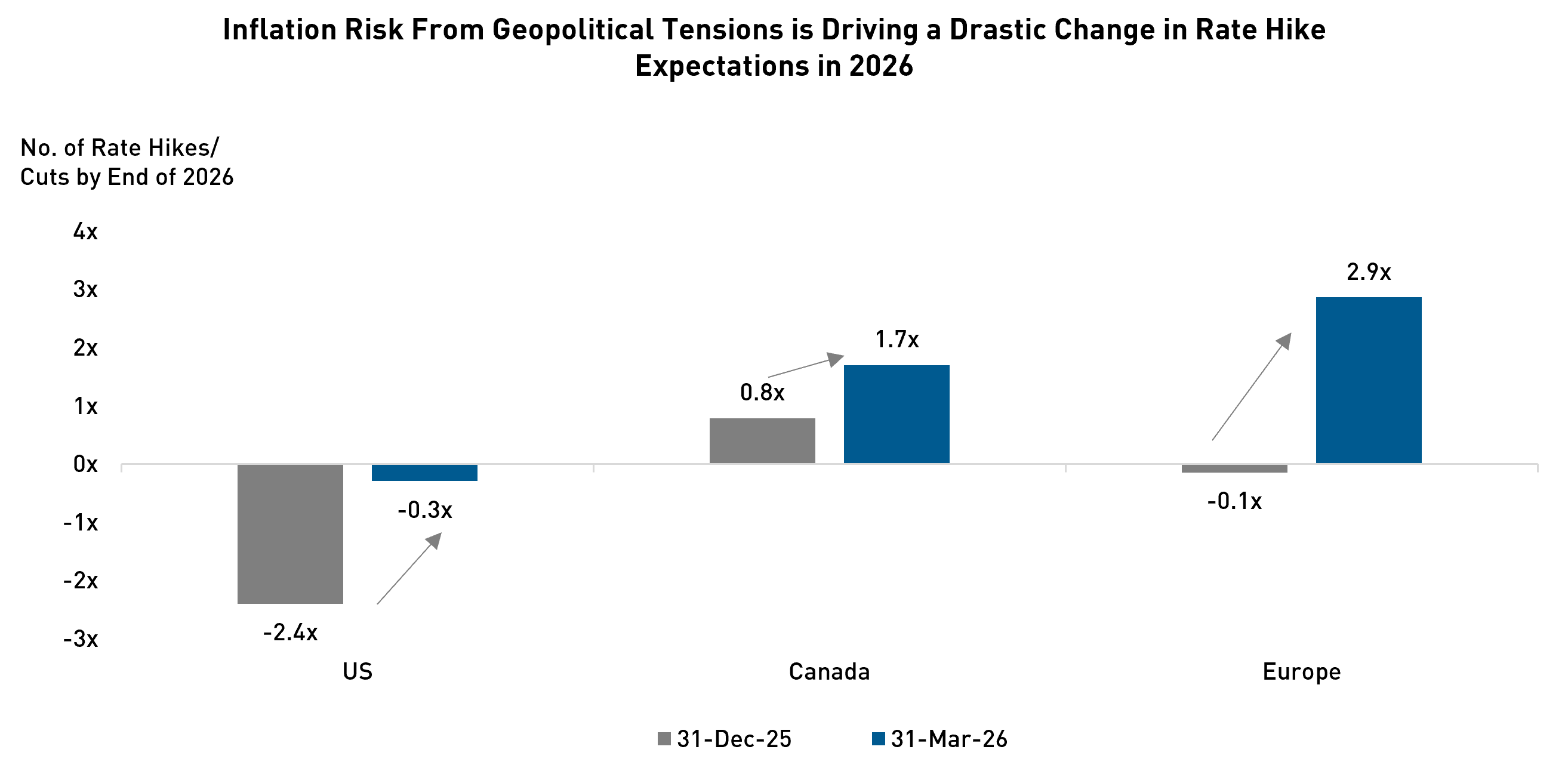
Data as of March 31, 2026. Source: Bloomberg. Hikes/cuts priced in is estimated by Bloomberg based on pricing of Overnight Interest Swap expiring in December 2026.
2. Decompression Across Credit Ratings and Rising Dispersion Continue to Reshape Public Credit Markets
Decompression across credit ratings has increased meaningfully in public credit, with both the direction and magnitude of spread movements in Q1 diverging from prior quarters. We are also observing elevated dispersion across sectors and geographies. In this environment, active management is critical - not only to capture relative value opportunities, but also to manage downside risk.
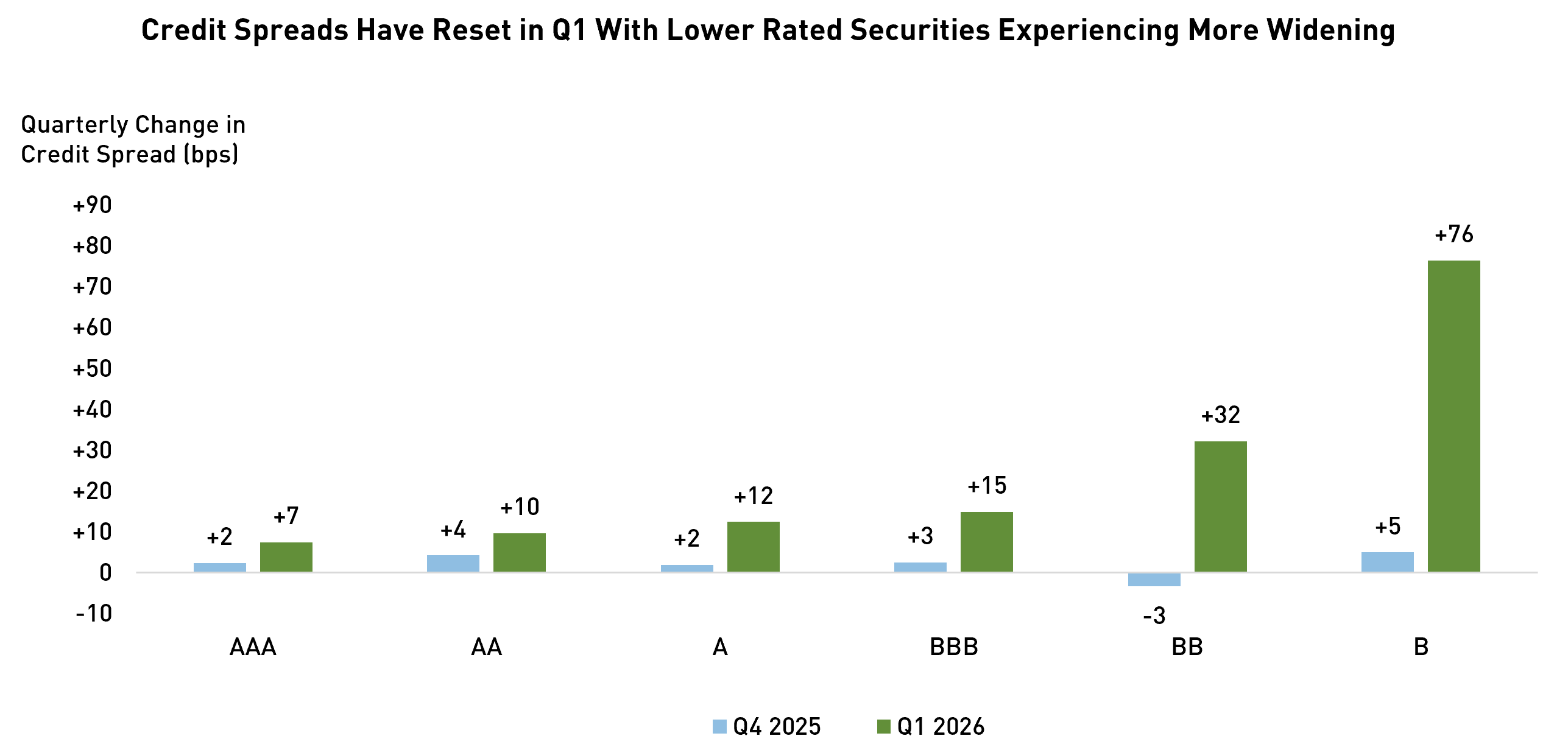
Data as of March 31, 2026. Source: BarclaysLive. Investment grade rating buckets are within the Bloomberg Barclays Global Investment Grade Corporate Bond Index ; while high yield rating buckets are within the Bloomberg Barclays US high yield corporate bond index.
3. AI Disruption Pressures Software and Private Credit
Beyond geopolitics, market focus has centered on AI disruption and its implications for credit. Private credit is now facing its first meaningful stress test this cycle, as private credit portfolios have roughly double the exposure to software compared to public credit. Public proxies such as BDCs – backed by similar loans – are trading at steep discounts to NAV and seeing sustained outflows in recent quarters, signaling growing investor caution in this space.
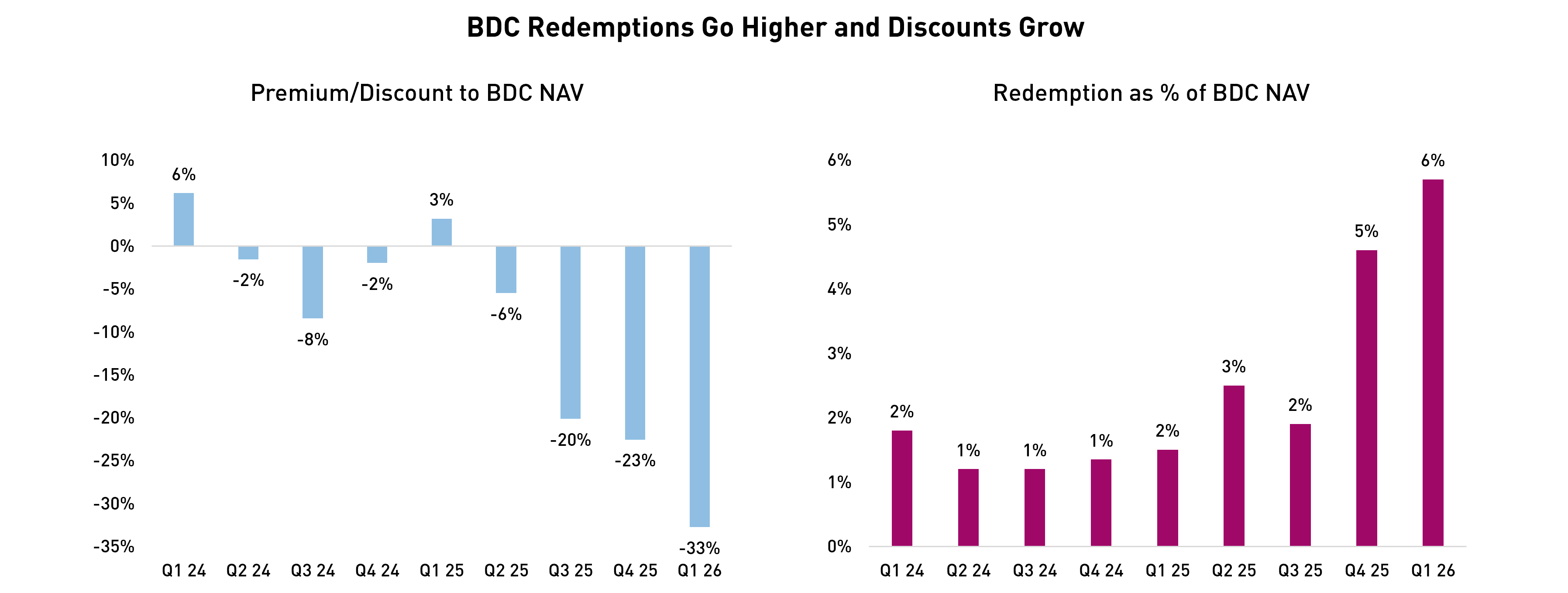
Data as of March 31, 2026. Source: BarclaysLive, Bloomberg, Morgan Stanley. The cohort consists of eight perpetual BDCs with IG debt (APODS, ARESII, BCRED, GCRED, HLEND, NHPIFS, OAKSCF, OCINCC).
4. AI Uncertainty Weighs on the Broadly-Syndicated Loans Market
AI-driven uncertainty is also impacting the broadly syndicated loan market. Borrowers perceived to face higher disruption risk are experiencing more difficulty accessing financing and are seeing spreads widen significantly versus levels seen at the end of January. In Q1, issuers with higher exposure to AI disruption made up about 10% of the issuance pipeline but accounted for nearly 60% of pulled issuance deals, reflecting weak investor demand.
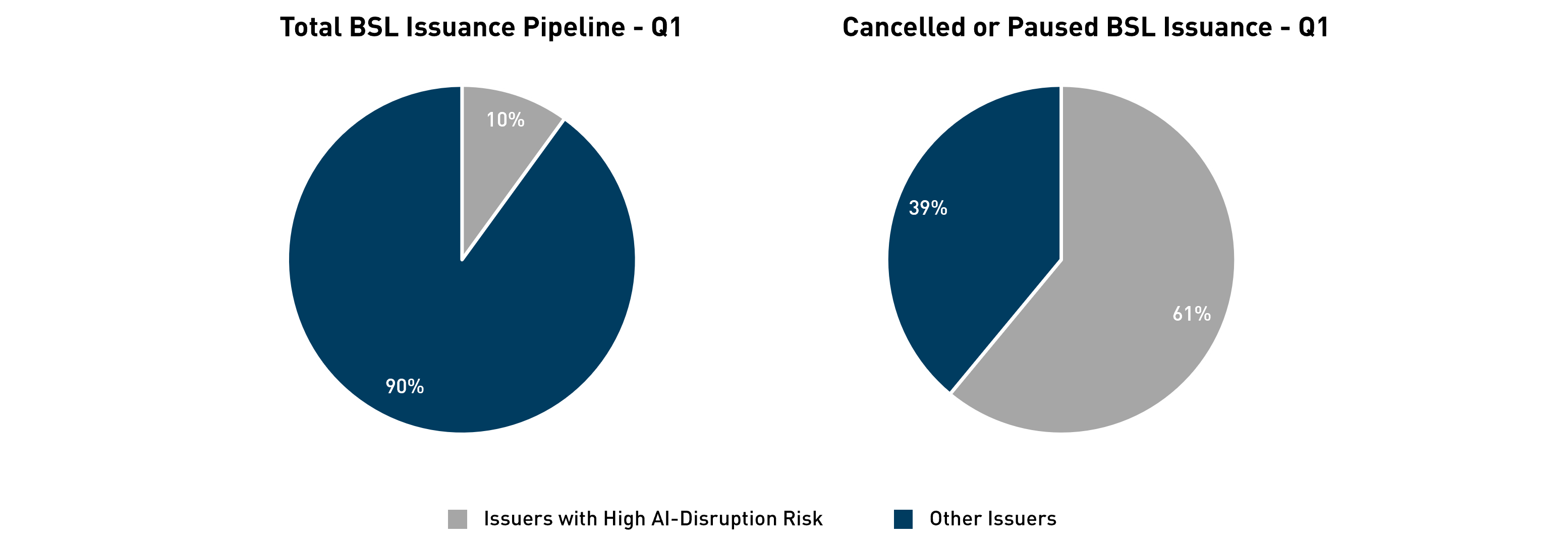
Data as of March 27, 2026. Source: BarclaysLive.
5. Reverse Yankee Issuance Surges as Companies Diversify Funding Sources
Despite volatility in secondary markets, primary issuance remains robust. A key trend is the surge in Investment Grade reverse Yankee issuance, with US issuers tapping European markets to diversify funding. We expect this trend to continue given ongoing geopolitical uncertainty – though a near-term rise in European rates could moderately temper issuance appetite. Overall, we remain defensively positioned but see strong opportunities to generate alpha through new issuance and active trading, and continue to participate selectively.
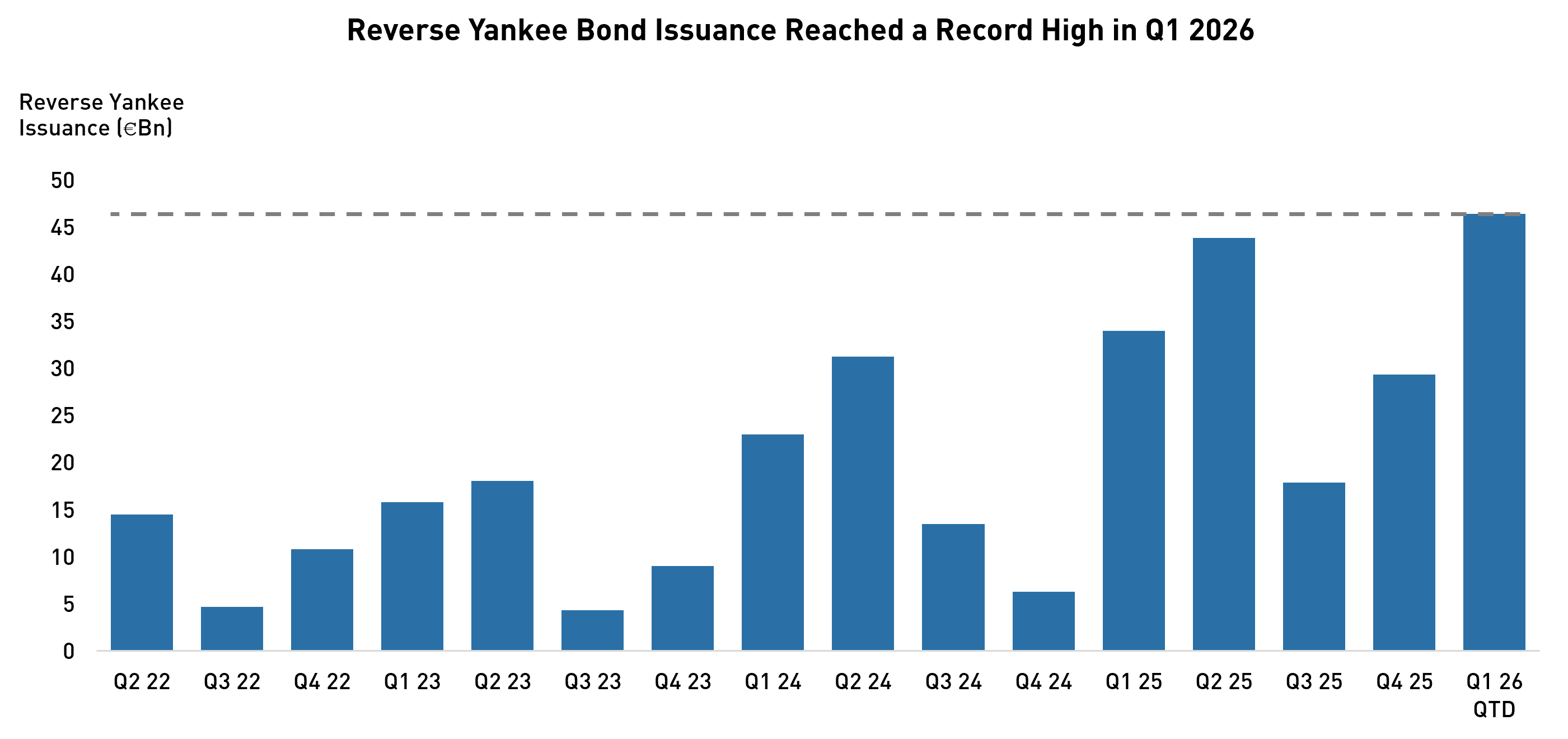
Source: Bloomberg, TD Securities. Data as of March 31, 2026.
Important Information
The information herein is presented by RP Investment Advisors LP (“RPIA”) and is for informational purposes only. It does not provide financial, legal, accounting, tax, investment, or other advice and should not be acted or relied upon in that regard without seeking the appropriate professional advice. The information is drawn from sources believed to be reliable, but the accuracy or completeness of the information is not guaranteed, nor in providing it does RPIA assume any responsibility or liability whatsoever. The information provided may be subject to change and RPIA does not undertake any obligation to communicate revisions or updates to the information presented. Unless otherwise stated, the source for all information is RPIA. The information presented does not form the basis of any offer or solicitation for the purchase or sale of securities. Products and services of RPIA are only available in jurisdictions where they may be lawfully offered and to investors who qualify under applicable regulation. The RPIA managed investment strategies discussed herein may be available to qualified Canadian investors through private and/or publicly offered investment funds. Eligibility and suitability of investing in these funds must be determined by registered dealing representatives of RPIA or third-party dealers.
“Forward-Looking” statements are based on assumptions made by RPIA regarding its opinion and investment strategies in certain market conditions and are subject to a number of mitigating factors. Economic and market conditions may change, which may materially impact actual future events and as a result RPIA’s views, the success of RPIA’s intended strategies as well as its actual course of conduct. Security and trade examples are presented for illustrative purposes and do not necessarily reflect a trade or current holding in any particular RPIA managed strategy or fund.